
Iranian Society of Gynecology Oncology (IRSGO)
Document Type : Original Research Article
Authors
1 Department of Obstetrics and Gynecology, Reproductive Health Research Center, Al-zahra Hospital, Guilan University of Medical Sciences, Rasht, Iran
2 Department of Biostatistics, School of Health, Road Trauma Research Center, Guilan University of Medical Sciences, Rasht, Iran
3 Department of Midwifery, Reproductive Health Research Center, Al-zahra Hospital, Guilan University of Medical Sciences, Rasht, Iran
Highlights
✅ Considering that adverse pregnancy outcomes are important causes of mortality and morbidity, early diagnosis of high-risk pregnancies and efforts for preventive interventions can be associated with reducing mortality and morbidity. Therefore, evaluation of the level AF-AFP can be helpful in determining adverse pregnancy outcomes.
Keywords
Alpha-fetoprotein (AFP) is a glycoprotein with 590 amino acids and a weight of about 70 kDa, which is first secreted by the yolk sac and then by the fetal liver (1-3). AFP levels in fetal serum and amniotic fluid continually increase until the 13th week of pregnancy and then decrease rapidly (4). The level of amniotic fluid alpha-fetoprotein (AF-AFP) decreases by 10% per week between 14-20 weeks of pregnancy (1). On the contrary, AFP levels in the mother's serum continuously increase after the 12th week of pregnancy until the 32nd week of pregnancy, and after that, it will decrease until delivery (4-6).
According to research, AFP level is affected by many maternal, fetal and placental factors. These factors including; race, maternal weight, maternal diseases (such as diabetes and preeclampsia), gestational age, multiples, aneuploidy, open neural tube defects (NTDs), abdominal wall defects (omphalocele, gastroschisis), intrauterine growth restriction (IUGR), intrauterine fetal death (IUFD), oligohydramnios, preterm labor (PTL), placental thrombosis, placenta previa, placental abruption (7-10).
Evaluation of AFP levels in maternal serum (MS-AFP) is a screening test to evaluate fetal abnormalities (5) that is usually performed at 15-20 weeks of pregnancy (11). Although MS-AFP evaluation is part of second-trimester screening for aneuploidy, abdominal wall defects, and NTDs (12, 13). But, it is also a diagnostic tool for high-risk pregnancies and predicting adverse pregnancy outcomes such as preeclampsia, abortion, PTL, IUFD, IUGR, small for gestational age (SGA), placental abruption (14-18). In other words, in the absence of NTDs and aneuploidy, abnormal levels of maternal serum markers in the first and second trimesters can reflect placental insufficiency and adverse pregnancy outcomes (19-21). Considering that adverse pregnancy outcomes are important causes of maternal, fetal and neonatal mortality and morbidity (15), therefore, early diagnosis of high-risk pregnancies and efforts for preventive interventions can reduce mortality and morbidity and achieve better results (19, 22, 23).
Although MS-AFP evaluation is a valuable method for screening for NTDS and adverse pregnancy outcomes, it is less accurate than AF-AFP screening (12). This issue is especially important in cases such as closed type NTDs, unexplained increase of AFP in maternal serum, high false positive and negative results (7). Also, the increase of MS-AFP suggests the need for further evaluation through ultrasound, amniocentesis and AF-AFP evaluation (15). Ultrasound is used to diagnose fetal structural anomalies (24). Amniocentesis is an invasive prenatal diagnostic procedure that is performed to identify any chromosomal abnormalities in the fetus. On the one hand, it helps the couple to make informed decisions about whether to continue the pregnancy, preparation for childbirth, and the neonatal prognosis, and on the other hand, it helps the doctor to make a more accurate diagnosis (25).
In most studies, the relationship between MS-AFP and adverse pregnancy outcomes has been evaluated, and less research has been done on the relationship between AF-AFP and adverse pregnancy outcomes. Therefore, the purpose of this study was to determine the relationship between the level of alpha-fetoprotein in amniotic fluid (AF-AFP) and adverse pregnancy outcomes.
This comparative analytical study was performed on 244 pregnant women aged 16 to 43 years who referred to a private prenatal clinic in Rasht (Iran). The purpose of this study was to determine the relationship between the level of alpha-fetoprotein in amniotic fluid (AF-AFP) and adverse pregnancy outcomes.
This research was based on the research project approved by Research and Technology and Ethics Committee of Guilan University of Medical Sciences with the code: IR.GUMS.REC.1396.394. Our study was conducted after obtaining the necessary permits and obtaining written informed consent from the patients.
The samples in this study were pregnant women with MS-AFP levels higher than two multiple of the median (MoM) in the second trimester screening. In these pregnant women, the serum test was repeated, and those who had MS-AFP levels higher than 2.5MoM after repeating the test were referred to a perinatologist and ultrasound performed for them. Patients who had no NTDs in ultrasound were studied, and amniocentesis was performed for them at 15-20 weeks. Another indications for amniocentesis in this study were advanced maternal age (Age > 35years), family or personal history of chromosomal abnormalities in previous pregnancies, abnormal parental karyotype, and presence of a soft marker in ultrasound (such as mild pyelectasis, echogenic cardiac mass, choroid cyst, etc.). The couple was given the necessary explanations about the purpose of the study, the invasiveness of the amniocentesis technique, possible benefits and risks, confidentiality of information and voluntary participation in the study. Written informed consent was obtained from them.
After amniocentesis, the sample sent to the laboratory for analysis and based on the results; the participants divided into four groups of 61 patients.
1. The first group (control group): pregnant women were with normal MS-AFP and amniocentesis was performed for reasons such as the mother's request, advanced maternal age (Age > 35years), family or personal history of chromosomal abnormalities in previous pregnancies, abnormal parental karyotype, and presence of a soft marker in ultrasound (such as mild pyelectasis, echogenic cardiac mass, choroid cyst, etc.).
2. The second group: pregnant women with high MS-AFP who had normal AF-AFP after amniocentesis (AF-AFP= 0.5-2.49 MoM).
3. The third group: pregnant women with high MS-AFP who had low AF-AFP after amniocentesis (AF-AFP ˂0.5 MoM).
4. The fourth group: pregnant women with high MS-AFP who had high AF-AFP after amniocentesis (AF-AFP
≥ 2.5 MoM(.
Exclusion criteria: Pregnant women with chronic hypertension, overt diabetes, chronic kidney disease, autoimmune disease and thrombophilia known before pregnancy, multiple pregnancy, molar pregnancy, structural or chromosomal abnormality and those whose follow-up and care was not possible were excluded from the study.
The participants' information was recorded in a demographic and obstetrics characteristics questionnaire including: age, body mass index (BMI), gravid, parity, abortion history, gestational age at the time of amniocentesis and adverse pregnancy outcomes. Adverse pregnancy outcomes included: abortion, still birth, IUGR, low birth weight (LBW), PTL, placental abruption, fetal abnormalities, preeclampsia, and gestational diabetes.
SPSS software version 20 (IBM Corp., Armonk, NY, USA) and descriptive and analytical statistics (Chi-Square, Fisher-exact, One-Way-Anowa, Post Hoc Tukey) used to analyze the data. Also, logistic regression model was used for multiple analysis. In all tests, a significance level of 0.05 was considered.
T In this study, 244 pregnant women aged 16 to 43 were evaluated in 4 groups of 61 patients to determine the relationship between AF-AFP level and adverse pregnancy outcomes.
The mean and standard deviation of the participants' age was 31±6.2 years. The youngest pregnant woman was 16 years old and the oldest was 43 years old.
The demographic and obstetric characteristics of pregnancy are reported in Table 1. According to this search, BMI, gestational age at the time of amniocentesis, gravid and parity in the four groups were generally statistically significant. There was a statistically significant difference between the previous abortion history in two-by-two comparisons between the control group and the second group (normal AF-AFP) (P=0.0017), the control group and the third group (low AF-AFP) (P=0.044), and the control group and the fourth group (high AF-AFP) (P=0.042). (Table 1)
Table 1. Demographic and obstetrics characteristics of pregnant women
| Variable | Groups (Mean ±SD) |
P-Value |
|||
| Control | Normal AF-AFP |
Low AF-AFP |
High AF-AFP |
||
| Age | 29.15±6.28 | 31.13±6.55 | 33.21±5.41 | 30.69±5.57 | 0.097 |
BMI |
29.53±4.94 | 31.11±4.34 | 27.64±4.68 | 28.26±4.56 | P1,2,3,4=0.0001 P1,2= 0.63 P1,3=0.032 P1,4= 0.143 P2,3=0.001 P2,4= 0.001 P3,4=0.461 |
| Gestational Age at the time of amniocentesis | 19.31±1.79 | 17.39±2.33 | 18.28±2.21 | 18.37±1.94 | 0.001 |
Gravid |
1.56±0.67 | 1.97±0.87 | 2.03±0.98 | 1.85±0.83 | P1,2,3,4= 0.012 P1,2= 0.004 P1,3= 0.002 P1,4= 0.033 P2,3= 0.698 P2,4= 0.496 P3,4= 0.277 |
Parity |
0.44±0.56 | 0.77±0.76 | 0.72±0.61 | 0.59±0.62 | P1,2,3,4= 0.024 P1,2=0.008 P1,3=0.01 P1,4=0.170 P2,3=0.694 P2,4=0.153 P3,4= 0.239 |
Previous history of abortion |
0.10±0.30 |
0.30±0.56 |
0.30±0.69 |
0.26±0.54 |
P1,2,3,4=0.141 P1,2= 0.017 P1,3=0.044 P1,4= 0.042 P2,3=0.999 P2,4= 0.743 P3,4=0.772 |
The frequency of adverse pregnancy outcomes in the fourth group (high AF-AFP) was higher than other groups (Figure1). Adverse outcomes include abortion (6.6%), stillbirth (6.6%), IUGR (18%), LBW (29.5%), PTL (21.3%), fetal abnormalities (4.9%), preeclampsia (14.8%), gestational diabetes (8.2%), in the fourth group (high AF-AFP) was higher than other groups. Placental abruption in the second group (normal AF-AFP) (1.6%) was higher than other groups. (Table 2)
Table 2. Comparison of adverse outcomes between four studied groups
| Variable | Groups Number(percent) |
P-Value | |||||
| Control | Normal AF-AFP |
Low AF-AFP |
High AF-AFP |
Total | |||
| abortion | No | 61(100) | 61(100) | 60(98.4) | 57(93.4) | 239(98) | P1,2,3,4= 0.059 P1,2= - P1,3= 0.5 P1,4=0.059 P2,3=0.5 P2,4=0.059 P3,4=0.182 P1vsOthers=0.234 |
| Yes | 0(0) | 0(0) | 1(1.6) | 4(6.6) | 5(2) | ||
| Still birth | No | 60(98.4) | 61(100) | 61(100) | 57(93.4) | 239(98) | P1,2,3,4=0.059 P1,2= 0.5 P1,3= 0.5 P1,4=0.182 P2,3=- P2,4=0.059 P3,4= 0.059 P1vsOthers=0.633 |
| Yes | 1(1.6) | 0(0) | 0(0) | 4(6.6) | 5(2) | ||
| Fetal abnormality | No | 61(100) | 61(100) | 60(98.4) | 58(95.1) | 240 (98.4) | P1,2,3,4=0.197 P1,2=- P1,3=0.5 P1,4=0.122 P2,3=0.5 P2,4= 0.122 P3,4= 0.309 P1vsOthers=0.314 |
| Yes | 0(0) | 0(0) | 1 (1.6) | 3(4.9) | 4 (1.6) | ||
| IUGR | No | 59 (96.7) | 60(98.4) | 59 (96.7) | 50 (82) | 228 (93.4) | P1,2,3,4= 0.003 P1,2= 0.5 P1,3= 0.691 P1,4=0.008 P2,3=0.5 P2,4= 0.002 P3,4=0.008 P1vsOthers=0.188 |
| Yes | 2(3.3) | 1(1.6) | 2(3.3) | 11(18) | 16(6.6) | ||
| PTL | No | 56(91.8) | 55(90.2) | 56(91.8) | 48(78.7) | 215(88.1) | P1,2,3,4= 0.072 P1,2= 0.752 P1,3= 0.999 P1,4= 0.041 P2,3= 0.752 P2,4= 0.081 P3,4=0.041 P1vsOthers=0.304 |
| Yes | 5(8.2) | 6(9.8) | 5(8.2) | 13(21.3) | 29(11.9) | ||
Preeclampsia |
No | 59(96.7) | 59(96.7) | 57(93.4) | 52(85.2) | 227(93) | P1,2,3,4= 0.063 P1,2=0.999 P1,3= 0.340 P1,4=0.027 P2,3=0.340 P2,4= 0.027 P3,4= 0.142 P1vsOthers=0.154 |
| Yes | 2(3.3) | 2(3.3) | 4(6.6) | 9(14.8) | 17(7) | ||
| Gestational diabetes | No | 61(100) | 58(95.1) | 59(96.7) | 56(91.8) | 234(95/9) | P1,2,3,4=0.153 P1,2=0.122 P1,3= 0.242 P1,4=0.029 P2,3= 0.5 P2,4=0.359 P3,4=0.220 P1vsOthers=0.053 |
| Yes | 0(0) | 3(4.9) | 2(3.3) | 5(8.2) | 10(4.1) | ||
| Placental abruption | No | 61(100) | 60(98.4) | 61(100) | 61(100) | 243(99/6) | P1,2,3,4=0.999 P1,2=0.5 P1,3=- P1,4=- P2,3=0.5 P2,4=0.5 P3,4=- P1vsOthers=0.750 |
| Yes | 0(0) | 1(1.6) | 0(0) | 0(0) | 1(0.4) | ||
| Birth weight | LBW | 11(18) | 3(4.9) | 8(13.2) | 18(29.5) | 40(16.4) | P1,2,3,4= 0.009 P1,2= 0.118 P1,3=0.217 P1,4= 0.342 P2,3=0.128 P2,4= 0.001 P3,4=0.061 P1vsOthers=0.729 |
| Normal | 48(78.7) | 54(88.5) | 52(85.2) | 43(70.5) | 197(80.7) | ||
| LGA | 2(3.3) | 4(6.6) | 1(1.6) | 0(0) | 7(2.9) | ||
Note: IUGR; intrauterine growth restriction, PTL; preterm labor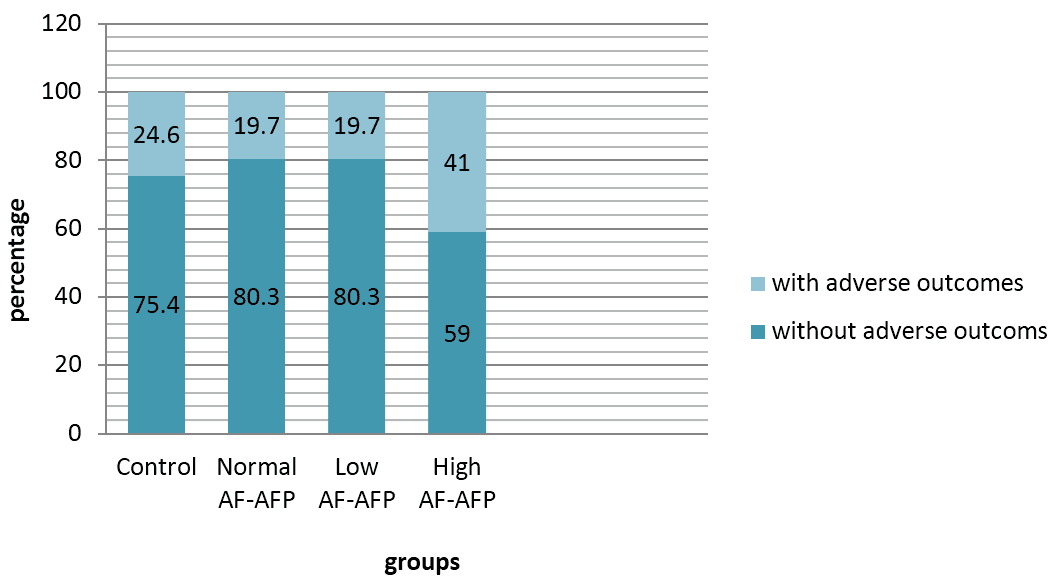
Figure 1. Frequency of adverse pregnancy outcomes in the four studied groups
The mean adverse outcomes in four groups were statistically significant (P=0.001). Based on two-by-two comparisons, this difference between the control group and the fourth group (high AF-AFP), the second (normal AF-AFP) and fourth groups, and the third (low AF-AFP) and fourth group were statistically significant, so that the adverse outcomes in the fourth group were higher than the other groups (Table 3).
Table 3. Descriptive statistics of pregnancy outcomes in the four studied groups
| groups | Number | Mean±SD | 95% Confidence Interval for Mean | Minimum | Maximum | P-Value | |
Lower Bound |
Upper Bound |
||||||
| Control | 61 | 0.34±0.68 | 0.17 | 0.52 | 0.00 | 3.00 | P1,2,3,4=0.001 P1,2=0.373 P1,3=0.998 P1,4=0.001 P2,3=0.932 P2,4= 0.001 P3,4= 0.001 P1vsOthers=0.149 |
| Normal AF-AFP | 61 | 0.26±0.66 | 0.9 | 0.43 | 0.00 | 4.00 | |
| Low AF-AFP | 61 | 0.38±0.92 | 0.14 | 0.61 | 0.00 | 4.00 | |
| High AF-AFP | 61 | 1.10±1.65 | 0.68 | 1.52 | 0.00 | 7.00 | |
| Total | 244 | 0.52±1.10 | 0.38 | 0.66 | 0.00 | 7.00 | |
A logistic regression model using Enter method was used to determine the Odds Ratio of adverse pregnancy outcomes in the studied groups compared to each other. Based on that, the incidence of adverse pregnancy outcomes in the fourth group was 1.2 times higher than the control group (reference group) with the control and adjustment of confounding and interfering factors, and this relationship was borderline statistically significant (P=0.056) (95% confidence interval, CI=0.982-4.621). (Table 4).
Table 4. Incidence of adverse pregnancy outcomes in the four studied groups
| groups | B | S.E. | Sig. | Odds Ratio (OR) | 95% Confidence Interval for OR | |
| Lower | Upper | |||||
| AFP | 0.025 | |||||
| Normal AF-AFP | -0.286 | 0.438 | 0.514 | 0.751 | 0.318 | 1.773 |
| Low AF-AFP | -0.286 | 0.438 | 0.514 | 0.751 | 0.318 | 1.773 |
| High AF-AFP | 0.756 | 0.395 | 0.056 | 2.130 | 0.982 | 4.621 |
| Control (Reference Group) |
0 | 1 | ||||
| Constant | -1.121 | 0.297 | 0.000 | 0.326 | ||
Note: Multiple logistic regression model
The purpose of this study was to determine the relationship between the level of AF-AFP and adverse pregnancy outcomes. Based on the results of this research, adverse pregnancy outcomes in the high AF-AFP group were higher than other groups.
In our study, abortion and still birth in the high AF-AFP group (6.6%) were higher than other groups, and the relationship between the groups were borderline statistically significant (p=0.059). Similar to the results of the present study, based on a study that aimed to evaluate pregnancy outcomes in women with high levels of MS-AFP, abortion in the group of women with high levels of MS-AFP was significantly higher than the control group (15). Based on a study conducted to assess the association between abnormal levels of maternal serum markers in the first and second trimester and adverse pregnancy outcomes, MS-AFP higher than 2.5MOM was associated with adverse pregnancy outcomes such as IUFD (20). Alvarez‐Nava et al. also conducted a study with the aim of to investigate the relationship between the increase of AF-AFP as an indicator of adverse obstetric outcomes in fetuses with Turner syndrome, based on which the increase of AF-AFP was associated with fetal death (17). In the interpretation of the above findings, the increase in AFP levels may be caused by placenta abnormality and placental ischemic diseases, which can lead to complications such as abortion and IUFD (9).
In our study, IUGR in the high AF-AFP group (18%) was higher than in other groups, and the relationship between the groups was statistically significant (P=0.003). IUGR was directly associated with high levels of MS-AFP in a cohort study (16). Sharony et al. conducted a study to answer the question "Is the ratio of maternal serum to amniotic fluid AFP superior to serum levels as a predictor of pregnancy complications?" and found that there was a significant relationship between RATIO and IUGR and that RATIO may be a predictor of IUGR (26). In our study, LBW in the high AF-AFP group (29.5%) was higher than in other groups, and the relationship between the groups was statistically significant (P=0.009). Yue, Zhang and Ying (27) performed a study aimed at evaluating the predictive value of the quadruple markers test for adverse pregnancy outcomes, based on which high levels of AFP were associated with an increased risk of LBW (27). In the interpretation of the above findings, the abnormal levels of MS-AFP may be caused by the pathogenesis of the placenta and its poor perfusion, which can lead to adverse pregnancy outcomes such as IUGR, LBW (28).
In our study, PTL in the high AF-AFP group (21.3%) was higher than other groups, but the relationship between groups was not statistically significant (P=0.072). Similar to the results of the present study, based on the studies that were conducted with the aim of investigating the relationship between the amount of AF-AFP and PTL and it was higher in the group with PTL, than the control group (29, 30) Yazdani, Rouholahnejad (31) reported that there was a significant association between high levels of MS-AFP and PTL (31). Although adverse pregnancy outcomes such as PTL occur mainly in the third trimester of pregnancy, its primary pathogenesis occurs mainly in the early stages of pregnancy (27). The pathogenesis of PTL is due to various reasons, but one of the main causes is uteroplacental ischemia (32). In other words, the abnormal increase in AFP level may be caused by the destruction of the placental barrier following ischemia, which leads to an increase in the transfer of AFP to the maternal circulation and amniotic fluid (27).
An interesting finding in our study was that the placental abruption in the second group (normal AF-AFP) (1.6%) was higher than other groups, but the relationship between groups was not statistically significant (P=0.999). In contrast, according to a study that aimed to investigate pregnancy outcomes in women with increased MS-AFP levels, placental abruption in the group of women with high MS-AFP was significantly higher than in the control group (15). Also, based on a study performed by Erol, Altinboga (33) with the aim of evaluating MS-AFP levels in patients with placental abruption, the level of MS-AFP was higher in patients with placental abruption compared to the control group (33). The difference between the results of our study and other studies may be due to the difference in the examined sample, which was amniotic fluid in our study and maternal serum in other studies. However, etiopathogenesis of placental abruption is still unclear (33). It seems that anatomical lesions of the placenta, such as damaged villi or rupture of placental vessels, may be behind the increase in AFP (10). In other words, an increase in MSAFP may reflect placental dysfunction (15).
In our study, fetal abnormalities in the high AF-AFP group (4.9%) were higher than in other groups, but the relationship between groups was not statistically significant (P=0.197). Bartkute, Balsyte (9) also conducted a study to assess the predictive value of MS-AFP as a marker for various pregnancy outcomes, and found that fetal malformations were higher in the group with elevated MS-AFP than in the other groups (9). With impaired function of the placental barrier, the fetus may be more exposed to pathogens, and this may be one of the reasons why women with increased levels of MS-AFP have more adverse pregnancy outcomes such as fetal malformation (15).
In our study, in preeclampsia the high AF-AFP group (14.8%) was higher than other groups, but the relationship between groups was not statistically significant (P=0.063). One study also found that high levels of AFP were associated with an increased risk of preeclampsia (27). According to that in preeclampsia insufficient invasion of trophoblasts into the spiral arteries of the mother occurs, this may be a reason for placental insufficiency, increased MS-AFP and adverse pregnancy outcomes such as preeclampsia (20). In contrast, based on a retrospective cohort study, there was no association between MS-AFP and preeclampsia (34).
In this study, although diabetes in the group with high AF-AFP (8.2%) was higher than in other groups, but the relationship between the groups was not statistically significant (P=0.153). Ozgen et al., also conducted a study to evaluate the predictive value of maternal serum screening test for adverse pregnancy outcomes, based on which MS-AFP levels were higher in patients with gestational diabetes than in the control group (35).
Strengths and Limitations
In most studies, the relationship between MS-AFP and adverse pregnancy outcomes has been evaluated. Therefore, evaluating the relationship between AF-AFP level and adverse pregnancy outcomes in this study has been one of its strengths. One of the limitations of the present study was that few studies had evaluated the relationship between AF-AFP level and adverse pregnancy outcomes. Therefore, further comparison of the results was not possible.
Based on the results of this study, adverse pregnancy outcomes including abortion, stillbirth, IUGR, LBW, PTL, fetal abnormalities, preeclampsia, gestational diabetes in the high AF-AFP group were higher than in other groups. Considering that adverse pregnancy outcomes are important causes of mortality and morbidity, early diagnosis of high-risk pregnancies and efforts for preventive interventions can be associated with reducing mortality and morbidity. Therefore, evaluation of the level AF-AFP can be helpful in determining adverse pregnancy outcomes. However, it is suggested that further studies are carried out to assess the usefulness of AF-AFP measurement in the diagnosis and management of high-risk pregnancies.
Funding Source
This study was funded by Guilan University of Medical Sciences.
This research was based on the research project approved by Research and Technology and Ethics Committee of Guilan University of Medical Sciences with the code: IR.GUMS.REC.1396.394. The researchers would like to thank the Vice-Chancellor of Research and Technology at Guilan University of Medical Sciences and all participants in this study.
The authors declare that they have no competing interests.
| Article View | 2,842 |
| PDF Download | 1,585 |
