Iranian Society of Gynecology Oncology (IRSGO)
Document Type : Original Research Article
Authors
1 Department of Applied Embryology, Institute of Infertility and Assisted Reproductive Techniques, Al-Nahrian University, Al-Nahrain, Iraq
2 Department of Anesthesia, Institute of Infertility and Assisted Reproductive Techniques, Al-Nahrain University, Al-Nahrain, Iraq
3 Department of Obstetrics and Gynecology, Faculty of Medicine, Mansoura University, Mansoura, Egypt
4 Department of Experimental Embryology Zoology, Faculty of Science, Mansoura University, Mansoura, Egypt
Highlights
✅ Because of its quicker recovery time and much greater pregnancy rate, remifentanil is preferred over fentanyl in normal general anesthetic treatments for egg harvest in ICSI operations.
Keywords
Infertility is one of the biggest problems of newlyweds in their early years of marriage. Primary infertility is a common reproductive problem that impacts between 10 % to 15% of couples, globally (1). The main obstacle to reproductive therapy has always been the issue of infertility. Ten to fifteen percent of women worldwide are said to be infertile (2). Ovarian abnormalities account for about 30–40% of the causes of infertility in women; the other causes are associated with uterine disorders, immunological variables, and systemic diseases (3).
The management of infertility includes assisted reproductive technologies (ARTs), fertility drugs, medical and/or surgical therapy of the underlying cause (4, 5). Infertility is treated by assisted reproductive technology (ART), particularly in vitro fertilization (IVF). Despite being a costly and time-consuming procedure, less than 40% of IVF cases are successful. Even after having IVF procedures, many infertile couples who are under a lot of emotional, financial, and physical stress are still unable to conceive (6).
In vitro fertilization (IVF) contains (7). Controlled ovarian stimulation (COS), oocyte pick-up (OPU), fertilization, embryo transfer (ET), and implantation define the efficacy of in vitro fertilization (IVF). A positive yield in each of these phases is what determines the success of IVF. Because the quality of the oocytes has an effect on the quality of the embryos, the fertilization process, and the implantability, the OPU method is necessary (8, 9). In spite of the fact that the OPU treatment is a minimally invasive operation, it is a painful process that calls for sedation, anesthesia, or analgesia alone (10, 11).
The best anesthesia technique must compromise a higher pregnancy rate, acceptable surgical anesthesia with minimum adverse effects, and fast recovery (12, 13). The numerous types of anesthetic techniques designated for oocyte recovery include neuraxial anesthesia (spinal or epidural), general anesthesia (GA), local block techniques (paracervical or paraovarian block), conscious sedation, and alternative techniques such as electroacupuncture or any combination of the above (14-16).
Fentanyl and Remifentanil are µ-opioid receptor agonists that have been stimulated by several authors because of their short-acting time (8–10 minutes), fast onset, elimination, and clearance rate without drug accretion, short recovery time, coupled with improved reproductive success after oocyte retrieval (14, 17). The side effects are pruritus, nausea, vomiting, hypotension, bradycardia, and respiratory destruction (18).
Patients
The present study was prospective comparative conducted in the infertility department of the "High Institute of Infertility Diagnosis and Assisted Reproductive Technologies/Reproductive Physiology/Al-Nahrain University/Baghdad/Iraq." It was approved by the ethical committee of the Faculty of Science at Mansoura University in Egypt. Sixty infertile women with various causes of infertility were included in the study and given intracytoplasmic sperm injections (ICSI). The women were 25 to 45 years old. The initial deadline for the investigation was September 2022, however it has now been extended to September 2023. Patients undergoing oocyte retrieval under general anesthesia were split into two categories according to the anesthetic regimen utilized. In one group, participants received midazolam, propofol, and fentanyl; in the other, they received remifentanil, midazolam, and propofol.
The standard ICSI procedure includes controlled ovarian stimulation, ovulation induction, oocyte harvesting under general anesthesia, and clinical assessment (history, examination, and investigation). Other steps were successfully completed by all participants, including serum sample collection pre- and post-anesthesia for later assessment of the concentration of hormone levels (prolactin, follicular stimulating hormone (FSH), luteal hormone (LH), recovery time, as well as beta-hCG testing (for biochemical pregnancy documentation). Processing of sperm was already taken place after oocyte denudation. Serum was taken pre- and post-anesthesia by using enzyme-linked immunosorbent assays (ELISA) in a private laboratory.
Results
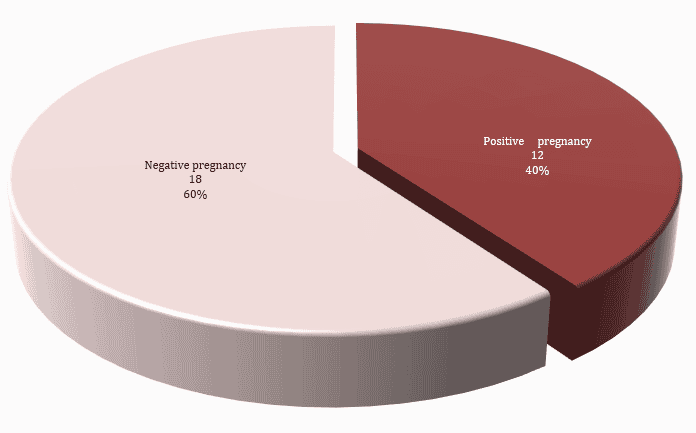
No significant demographic differences were seen between Fentanyl and remifentanil treatment groups (P > 0.05), according to the data given in tables 1 and 2 for the infertile women who participated in this research. Comparing the hormonal levels before and after fentanyl anesthesia, according to the results there were significantly higher LH levels after fentanyl anesthesia (60.57 ± 3.61 vs. 57.77 ± 2.75; p = 0.014); however, there were insignificantly higher FSH (p = 0.481) and prolactin (p=0.076) levels post fentanyl anesthesia (table 3). There were also significantly higher LH levels after remifentanil anesthesia (73.97 ± 3.67 vs. 66.57 ± 3.80; p = 0.046); in addition, there were insignificantly higher FSH levels (52.93 ± 4.35 vs. 47.57 ± 3.45; p = 0.383)16) levels after remifentanil anesthesia (table 4). In the fentanyl group, 11 (36.7%) patients out of 30 became pregnant, although in remifentanil the pregnancy rate was 40.0%). There were no significant differences in pregnancy rates between the studied groups (p = 0.791), as demonstrated in (Table 5), Figures (1 and 2). The recovery time was significantly higher in the fentanyl group (14.87 ± 3.03 vs. 8.10 ± 1.56; p<0.001), as presented in (Table 6).
Table 1. Comparison of demographic features between groups of fentanyl and remifentanil
| Parameters | Fentanyl group n=30 |
Remifentanil group n=30 |
p-value | |
| Age (years) (Mean±SD) | 31.60 ± 6.39 | 30.60 ± 4.18 | 0.066Ŧ NS |
|
| BMI (kg/m²) (Mean±SD) | 26.81 ± 4.25 | 28.43 ± 4.82 | 0.177 Ŧ NS |
|
| BMI ranking frequency (%) | Normal weight | 8 (26.7 %) | 9 (30.0 %) | 0.238 Ꞓ NS |
| Over weight | 15 (50.0 %) | 9 (30.0 %) | ||
| Obese | 7 (23.3 %) | 12 (40.0 %) | ||
| Duration of infertility (years)(Mean±SD) | 8.00 ± 4.95 | 7.23 ± 4.72 | 0.542 Ŧ NS |
|
| Type of infertility frequency (%) |
Primary | 27 (90.0 %) | 25 (83.3 %) | 0.448 Ꞓ NS |
| Secondary | 3 (10.0 %) | 5 (16.7 %) | ||
| Causes of infertility | Female causes | 4 (13.3 %) | 3 (10.0 %) | 0.091 Ꞓ NS |
| Male causes | 20 (66.7 %) | 12 (40.0 %) | ||
| PCOS | 1 (3.3 %) | 5 (16.7 %) | ||
| Unexplained | 5 (16.7 %) | 10 (33.3 %) | ||
Table 2. Comparison of serum LH, FSH, and prolactin levels between groups of fentanyl and remifentanil
|
Parameters |
Fentanyl group |
Remifentanil group |
p-value |
|
LH (mIU/ml) |
57.77 ± 2.75 |
66.57 ± 3.80 |
0.066 Ŧ |
|
FSH (mIU/ml) |
43.93 ± 2.77 |
47.57 ± 3.45 |
0.415 Ŧ |
|
Prolactin (ng/ml) |
1258 ± 74 |
1407 ± 87 |
0.194 Ŧ |
LH: Luteinizing hormone; FSH: Follicle stimulating hormone; NS: Not significant (p > 0.05); Ŧ: Independent sample t-test
Table 3. Comparison of serum LH, FSH, and prolactin levels before and after fentanyl anesthesia
|
Parameters |
Before anesthesia |
After anesthesia |
p-value |
|
LH (mIU/ml) |
57.77 ± 2.75 |
60.57 ± 3.61 |
0.014Ƥ |
|
FSH (mIU/ml) |
43.93 ± 2.77 |
47.20 ± 4.89 |
0.481 Ƥ |
|
Prolactin (ng/ml) |
1258 ± 74 |
1535 ± 95 |
0.076 Ƥ |
LH: Luteinizing hormone; FSH: Follicle stimulating hormone; NS: Not significant (p > 0.05); S: Significant (p≤ 0.05) Ƥ: paired sample t-test
Table 4. Comparison between group of serum LH, FSH, and prolactin levels before and after anesthesia in the remifentanil
|
Parameters |
Before anesthesia |
After anesthesia |
p value |
|
LH (mIU/ml) |
66.57 ± 3.80 |
73.97 ± 3.67 |
0.046 Ƥ |
|
FSH (mIU/ml) |
47.57 ± 3.45 |
52.93 ± 4.35 |
0.383 Ƥ |
|
Prolactin (ng/ml) |
1408 ± 87 |
1574 ± 93 |
0.116 Ƥ |
LH: Luteinizing hormone; FSH: Follicle stimulating hormone; S: Significant (p ≤ 0.05); NS: Not significant (p > 0.05); Ƥ: Paired sample t test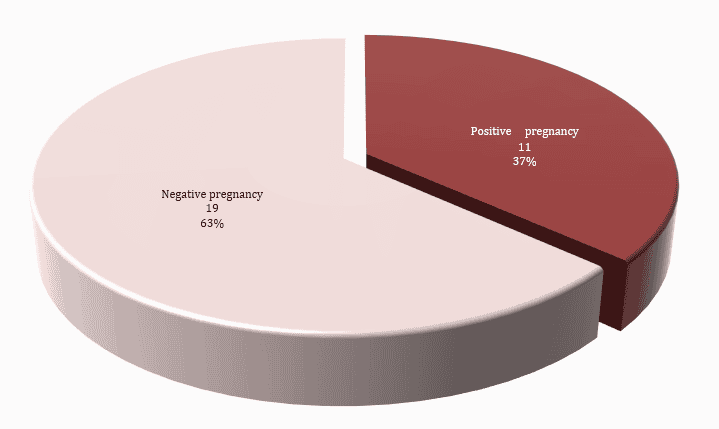
Discussion
The research included the categorization of 60 women who were unable to conceive into two groups. One group of 30 women was administered fentanyl, while the other group of 30 women was given remifentanil during the administration of general anesthesia for the purpose of oocyte retrieval. This study analyzed the outcomes of intracytoplasmic sperm injection (ICSI) cycles, specifically focusing on positive pregnancy test results, blood hormone levels, and recuperation time.
Oocyte retrieval is a quick but stressful procedure for women due to social and physiological aspects, as well as pain from the ovarian capsule and vaginal mucosa penetration. Since there is no evidence that midazolam negatively affects the success of IVF, it was administered to every patient in the current trial to ease their anxiety (19-21).
This research is the first to evaluate LH levels before and after fentanyl anesthesia; the data support the extremely significant difference in LH levels after fentanyl anesthesia; nonetheless, there were marginally greater levels of prolactin and FSH after fentanyl anesthesia. Some writers examined the effects of sedation (diazepam, propofol or midazolam) used for oocyte retrieval with GA (fentanyl with either propofol or isoflurane) when it came to opioids. They discovered that four hours after the conclusion of the procedure, elevated prolactin levels persisted. The hypothalamus produces more dopamine in response to an increase in prolactin, and this dopamine then suppresses the production of FSH and gonadotropin-releasing hormone (22).
In the current study, there were also significantly higher LH levels after remifentanil anesthesia. In addition, there were insignificantly higher FSH and prolactin levels after remifentanil anesthesia. However, no other publication has compared the effects of remifentanil on the hormone concentrations described in this study; consequently, this work may be the first to highlight this topic.
The current research found no statistically significant difference in the pregnancy rates of the fentanyl and remifentanil groups, with the remifentanil group having a higher rate at 37% compared to 40%. The optimal anesthetic method for IVF should offer effective surgical anesthesia with few adverse effects, rapid recovery, a high likelihood of successful pregnancy, and the lowest necessary exposure period (23). Comparative studies have shown that remifentanil has a higher risk of pregnancy compared to other anesthetic medicines such fentanyl, propofol, nitrous oxide, and remifentanil (24, 25). Multiple studies have shown that ketamine had little negative effects on pregnancy outcomes when compared to fentanyl, propofol, isoflurane, and propofol in infertile women undergoing oocyte retrieval (26); however, Nossair in 2017 compared to thiopental, fentanyl, and propofol observed a considerably lower pregnancy rate associated with the administration of ketamine, and they did not include remifentanil in their investigation (27). When compared to fentanyl, the remifentanil-based monitored anesthetic care (MAC) strategy has been shown to have a better likelihood of successful pregnancy. According to a different research conducted in 2014 by Jarahzadeh, Jouya (28) remifentanil is superior to fentanyl and may increase the likelihood of becoming pregnant (28).
In the current study, the recovery time was significantly higher in the fentanyl group than in the remifentanil group. However, it was discovered that there was no appreciable difference in procedure duration between the use of remifentanil and other anesthetic agents such as local anesthesia, propofol/alfentanil, and pethidine/midazolam (29). Simultaneously, other authors observed that remifentanil exhibited superior speed compared to propofol, alfentanil, nitrous gas, and fentanyl in medical procedures (4). According to Jarahzadeh et al. and Oliveira et al., infertile women who get remifentanil have a significantly shorter recovery period compared to other infertile women (25, 30).
Conclusion
Because of its quicker recovery time and much greater pregnancy rate, remifentanil is preferred over fentanyl in normal general anesthetic treatments for egg harvest in ICSI operations.
Acknowledgments
None.
Funding Source
None.
Conflicts of Interest
None.

| Article View | 1,324 |
| PDF Download | 571 |