
Iranian Society of Gynecology Oncology (IRSGO)
Document Type : Original Research Article
Authors
1 Clinical Management Unit for Obstetrics and Gynecology, University Hospital Virgen Macarena, Seville, Spain
2 Department of Radiation Oncology, HM Hospitals, University Hospital Sanchinarro, Madrid, Spain
3 Institute of Science and Technology, Loyola University, Dos Hermanas, Seville, Spain
Highlights
✅ To the best of our knowledge, we may have created the first reliable and internally validated prediction model for cervical cancer survivors based on predictors like vaginal shortening, age, ovarian preservation, functional well–being, and follow–up duration that significantly affect female sexual function as targets for potential intervention.
Keywords
According to the definition of sexual dysfunction provided by the American Psychological Association, it is "the persistent and recurrent sexual desire and psychophysiological disorders that characterize the sexual response cycle, causing discomfort and difficulties in interpersonal relationships" (1). After finishing their cancer treatments, between 40 and 100 % of cervical cancer survivors experience sexual dysfunction (2, 3).
The evaluation of sexual function becomes extremely important given that cervical cancer patients are relatively young (4–7) and sexually active at the time of diagnosis. In fact, sexual dysfunction has the largest detrimental effect on the quality of life of cervical cancer survivors (8).
Sexual dysfunction is a multifaceted problem that affects many cervical cancer survivors (9, 10) and is influenced by biological, neurological, psychological, social, religious, ethical, cultural, and racial factors (11-19).
Symptoms such as vaginal discharge and bleeding, fear of cancer recurrence, anxiety, and depression may affect sexual function and activity (20–23). On the one hand, premenopausal survivors have more sexual disorders than postmenopausal survivors, which may explain why sexual function is worse in younger survivors than older survivors (24–26). On the other hand, menopausal symptoms and sexual function have not been linked (27, 28). Zhou et al. found that cervical cancer survivors with higher–skilled occupations have better sexual function, which is likely related to a higher educational level and a lesser need for radiation therapy (3).
Sexual function has been associated with the adverse effects of cervical cancer treatment (29, 30), such as fatigue, altered genital and self–body image, pain, lower limb lymphedema (31), and urinary incontinence (32–35). These adverse effects increase the risk of losing independence, altering social relationships, and developing sexual dysfunction (9, 36). However, there is a disagreement regarding the effect of cervical cancer and its treatment on sexual desire (5, 37).
Since the presence of the uterus, ovaries, vagina, and vulva is closely related to self–identity, femininity, and sexuality (38), organic and neurological factors continue to be relevant in the impairment of sexual function in patients undergoing radical hysterectomy (17, 39). Patients undergoing radical hysterectomy are at risk for sexual dysfunction due to comorbidities, particularly intestinal and cardiac conditions (40), advanced age (26), and low educational level, more advanced disease stage (41), absence of ovarian preservation, vaginal shortening, and adjuvant radiation therapy (42). In fact, compared to a radical hysterectomy alone, adjuvant radiation therapy causes more severe and long–lasting sexual dysfunction (43).
Sexual function can be severely harmed by even mild–moderate toxicity (44, 45). Vaginal toxicity, dose-volume histogram characteristics, and sexual function have not been observed to be related (46). Regarding the use of intensity–modulated or three-dimensional conformal radiation therapy, no appreciable alterations in sexual function have been found (47). In patients receiving radiation therapy or concurrent chemoradiotherapy, advanced age increases the risk of sexual dysfunction and decreases sexual activity (8). Married women have much more sexual activity both before and after radiation therapy, according to Yavas et al. (48).
We sought to find the independent sociodemographic, disease–related, and treatment-related determinants of sexual function following cervical cancer treatment because there has not been a published nomogram for predicting sexual function in individuals with this disease.
Study design and population
Between January 1, 2010, and January 31, 2019, we conducted a prospective cohort study on patients with cervical cancer at various clinical stages who underwent various cervical cancer treatment regimens and were monitored at the Outpatient Gynecologic Oncology and Radiation Oncology Clinics of a tertiary hospital. Questionnaires were given out beginning on August 1, 2016. We enrolled 229 subjects after applying the exclusion criteria to 263 potentially eligible patients with cervical cancer, who were chosen to use a successive sampling technique. Ultimately, 104 respondents were recruited for the prospective female sexual function study.
Participant selection and assignment
Inclusion criteria
Women 18 years or older at the time of the cervical cancer diagnosis
Histological confirmation of invasive cervical cancer
Absence of current therapy for cervical cancer
Ability to read and understand written and/or spoken Spanish
Normal cognitive function
Exclusion criteria
Personal history of or concomitant preneoplastic lesion or cancer other than cervical cancer
Radiotherapy and/or chemotherapy prior to the cervical cancer diagnosis
Failure to complete questionnaires
Inability to conduct a regular follow–up of the cervical cancer
Data collection: study variables, measures, and instruments
We extracted data on sociodemographic and clinical variables and collected clinicopathologic data (stage, treatment modalities, therapy compliance, adverse effects, and routine follow–up visits) from electronic medical records.
Before they signed the informed consent form to participate in the study and agree to publication, the participants were provided pertinent, clear, and concise information about it. The Female Sexual Function Index (FSFI) (49, 50), a sociodemographic questionnaire (51), and the Functional Assessment Cancer Therapy–Cervix (FACT–Cx) (52) version 4.0 questionnaire were given to each participant.
FACT–Cx
The FACT–Cx v4.0 scale is a combined multidimensional questionnaire (generic and disease-specific), composed of 42 questions, that includes the FACT–General questionnaire (FACT–G), comprised of 27 questions divided into four domains: “physical well–being”, "social/familiar well–being", “emotional well–being”, and “functional well–being”. The FACT–Cx v4.0 includes a domain of “additional concerns” (15 questions) that assesses self–image (B4 and C7) among others. Higher ratings suggest poorer conditions for "additional concerns".
FSFI
The FSFI multidimensional questionnaire (49, 50) is a specific tool to measure female sexual function, composed of 19 items organized into six domains: two items on sexual desire (questions 1 and 2), four items on sexual arousal (questions 3–6), four items on lubrication (questions 7–10), three items on orgasm (questions 11–13), three items on sexual satisfaction (questions 14–16), and three items on dyspareunia (questions 17 and 18). The score range for items 1, 2, 15, and 16 is 1–5 and 0–5 for the rest, where zero indicates that there was no sexual intercourse during the last 4 weeks. The scores for each domain are added up and multiplied by a predetermined factor to weight each domain equally. The 6 FSFI subscale scores are scaled to have a maximum score of 6. The subscale scores are summed to calculate the FSFI total score, which has a maximum score of 36. Because 4 items have no response option scored 0 (2 items from the desire subscale and 2 from the satisfaction subscale), the minimum possible score for the desire subscale, the satisfaction subscale, and the FSFI total score is greater than 0. Supplementary material I explains missing item data were handled when calculating FSFI scores.
Interpretation
Higher scores correlate with better female sexual function (53). A total score less than or equal to 26.55 or less than or equal to 3.6 in any domain is diagnostic of female sexual dysfunction (54).
Properties
According to Rosen et al. (53) and Lou (55), the total score and domains have an excellent initial internal consistency and reliability (Cronbach's α coefficient≥0.82; Cronbach's α coefficient=0.79–0.86, respectively). The outcomes reported by Baser et al. (49) were even better than those shown by Rosen et al. (53), with a Cronbach's α coefficient for the total score and the domains of 0.94 and 0.85–0.94, respectively. This questionnaire has been validated in cervical cancer survivors (10).
We evaluated female sexual function prospectively at several time points throughout the follow–up: baseline scores (recorded when the patient first attended a consultation before the beginning of the cancer treatment) and subsequent evaluations with time intervals of 0–6 (T1), 7–12 (T2), 13–24 (T3), 25–60 (T4), and more than 60 months (T5) after the end of the treatment for cervical cancer. The intervals for the follow-up visits were 0 (T1), 6 (T2), 7–12 (T3), 13–24 (T4), and more than 24 months (T5) since the first consultation for patients who did not fill in the baseline questionnaires. Female sexual function was also studied using the respondents as controls throughout the follow–up period.
Statistical analyses
The statistical software R (R Foundation for Statistical Computing, Vienna, Austria. R Core Team [2017]) calculated the sample size for detecting statistically significant variations in the within-subject FSFI total scores employing the pwr.t.test function according to conventional effect size from Cohen (56) and clinical studies (d Cohen=0.5; size=medium, effect size=0.5) (57). We should sample at least 64 subjects for a desired power (type 2 error) of 80%, type I error tolerance of 0.05 (level of significance), and hypothesized effect size of 0.5.
We imported the data into the statistical software program R. (R Software Service, INC., USA). Given that the FSFI total score had a non–normal distribution, we developed a beta generalized linear model to evaluate predictors for female sexual function. Based on the scientific evidence and the backward selection of variables significantly associated with the FSFI total score in the univariate linear regression analysis implemented during the feature selection stage [vaginal shortening score on FACT–Cx (Cx4), surgical technique, age, ovarian preservation, fecal incontinence, FACT–Cx functional well–being domain, and follow–up duration], we employed a mixed strategy for selecting predictors, and we validated them by looking at the logistic regression coefficient values and multivariate analyses examining the joint effect of the variables found to correlate with FSFI total score in the univariate analyses.
The loss of follow–up and the impossibility of abstracting information on the sexual function of the women who refused to participate or who could not be recruited was a limiting factor that led to an information bias. But we also conducted an attrition analysis (5, 58) with a weighting strategy for coping with drop–out (59) and a sensitive analysis employing the function of the R package called sensemark (60).
We used a value of the variance inflation factor greater than five as the limit for considering multicollinearity and, consequently, low reliability of the generalized linear model. Discrimination was evaluated using Harrell’s concordance index. Lastly, we employed a bootstrap procedure for the internal validation.
We used Spearman's correlation coefficient (ρ) to measure the linear dependence between two quantitative variables with non–parametric distribution or two ordinal variables with 5 levels or more.
All hypothesis tests were 2–tailed. We defined the limit of statistical significance as a P–value less than 0.05.
Ethical approval
The research project was approved by the Research Ethics Committee of our institution, according to the requirements of Spanish Law 14/2007 of July 3 on biomedical research and the 1964 Declaration of Helsinki.
The research assistant obtained a signed informed consent from each participant for data collection and publication. We will provide our data for independent analysis for the purposes of additional data analysis or for the reproducibility of this study in other centers if such is requested.
Results
Figure 1. shows the flow diagram of the respondents in the prospective study.
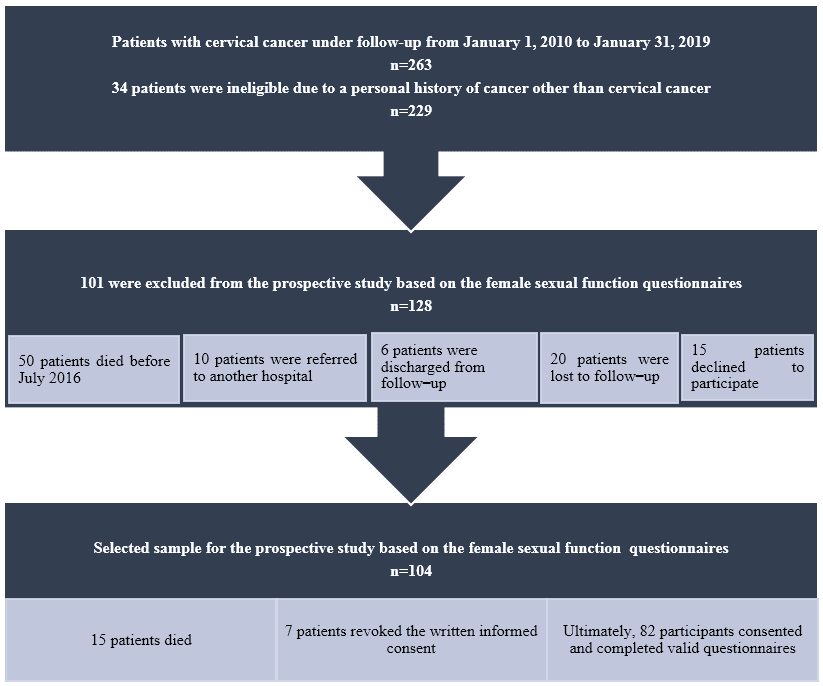
Table 1. Confounding factors analysis regarding sexual activity and female sexual dysfunction of cervical cancer survivors
| VARIABLES | Sexually active vs. inactive survivors (P) |
| Age | <0.0001 |
| Menopausal status | <0.0001 |
| Marital status | 0.211 |
| Anxiety/depression | 0.181 |
| FACT–Cx v4.0 emotional well–being score | 0.15 |
| Urinary incontinence | 0.459 |
| VARIABLES | Normal sexual function vs. sexual dysfunction (P) |
| Educational level | 0.336 |
| Disease stage | 0.524 |
| External beam radiation therapy | 0.337 |
| Brachytherapy | 0.381 |
| Recurrent cervical cancer | 0.064 |
Construction, calibration, and validation of a prediction model for female sexual function
We developed a beta generalized linear model to predict the female sexual function based on the FSFI total score that had a continuous probability distribution at T1. We selected this assessment time since it included the most data. The model had a high predictive ability of 78% (Harrell's concordance index=0.78) and was internally validated, without multicollinearity (variance inflation factor=1.05–1.26). Age, ovarian preservation, and vaginal shortening score on the FACT–Cx (Cx4) were included as risk variables. On the other hand, FACT–Cx functional well–being domain score, and follow–up duration were protective variables for female sexual function. Table 2. shows the summary and internal validation of the prediction model.
Table 2. Summary and internal validation of the prediction model for overall female sexual function of cervical cancer survivors
|
βn |
SEE |
z–value |
Pr(>|z|) |
95% CI |
VIF |
|||
|
β0 |
15.02 |
7.13 |
2.11 |
0.04 |
(1.04, 29.01) |
- |
||
|
Vaginal shortening score on FACT–Cx (Cx4) |
-1.72 |
0.96 |
-1.8 |
0.077 |
(-3.6, 0.15) |
1.05 |
||
|
Age |
-0.42 |
0.11 |
-4 |
0.0002 |
(-0.63, -0.22) |
1.26 |
||
|
FACT–Cx v4.0 FWB domain score |
0.84 |
0.19 |
4.49 |
<0.0001 |
(0.47, 1.2) |
1.05 |
||
|
Follow–up duration |
4.04 |
1.6 |
2.52 |
0.015 |
(0.89, 7.18) |
1.19 |
||
|
Ovary preservation |
-12.07 |
4.53 |
-2.67 |
0.01 |
(-20.95, -3.2) |
1.06 |
||
|
Residuals: |
||||||||
|
Bootstrapping statistics |
||||||||
|
Bootstrap estimate |
Original (t0) |
Bias |
SEE |
|||||
|
t1 |
15.02 |
0.02 |
8.32 |
|||||
|
t2 |
-1.72 |
-0.09 |
0.89 |
|||||
|
t3 |
-0.42 |
-0.004 |
0.12 |
|||||
|
t4 |
0.84 |
0.02 |
0.18 |
|||||
|
t5 |
4.04 |
-0.06 |
1.57 |
|||||
|
t6 |
-12.07 |
-0.002 |
5.95 |
|||||
|
|
|
|
|
|
|
|
|
|
aAbbreviations: AIC, Akaike information criterion; β0, intercept; βn, regression coefficient; C–index, Harrell’s concordance index; CI, confidence interval; FACT–Cx, Functional Assessment of Cancer Therapy–Cervix; FWB, Functional well–being; Pr(>|z|: p–value; Q, quartile; R, number of repetitions; SEE, standard error estimate; VIF, variance inflation factor; Z, Wald test
bBias is a difference between the mean of bootstrap realizations (those from tn), called a bootstrap estimate of T and the value of the statistic in the original dataset (the one from t0).
cThe model’s formula has a linear format, as shown in the equation g (µ) = α + β1χ1 + … βnXn, in which the link function g (µ) (Y) indicates a function of the mean µ of the probability of distribution of the dependent variable Y. µ is the expected value or the mean of the dependent variable. The regression coefficients are α and β1…n, in which n is the number of independent predictors. This last expression, if the coefficients are known, allows us to directly calculate µ for the different values of the independent variable Χ.
Discussion
As far as we are aware, there is no published prediction model for the female sexual function of cervical cancer survivors.
Predictors of sexual dysfunction in cervical cancer survivors
Generic predictors
Sexual activity and function may be impaired by symptoms, such as anxiety and depression (20–23). There were no differences in the rates of sexual activity between survivors who experienced anxiety or depression and those who did not. According to the findings of earlier studies, older age and menopausal status are risk factors for sexual inactivity and dysfunction in our study (26, 39, 41). According to Zhou et al. (3), a higher educational level has a favorable impact on female sexual function. We found no influence, though. Married women engage in much more sexual activity both before and after radiation therapy, according to Yavas et al. (48). We did not discover any differences in sexual activity among marital statuses, though. Unlike the findings published by Hung et al. (41), a more advanced disease stage was not a risk factor for sexual dysfunction in our cohort. According to Huffman et al. (30), recurrent disease impairs sexual function. However, there were no differences between those who experienced recurrences and those who did not in our study.
Predictors related to adverse effects of cancer treatment
Sexual function of cervical cancer survivors has been associated with adverse effects of cancer treatment (29, 30), including fatigue, changes in genital and self–body image, iatrogenic menopause (39), vaginal shortening (42), and urinary incontinence (32–35), predisposing to a loss of independence, changes in social relationships, and sexual dysfunction (9, 36). In line with the findings of Ratner et al. (16), we found that fatigue and poor functional well–being have a deleterious effect on female sexual function. Juraskova et al. (39) found that bilateral oophorectomy worsens sexual function. Our data, however, do not support these findings, most likely because our premenopausal participants are more sexually active and at a higher risk of female sexual dysfunction, which is in line with the findings of Bjelic-Radisic (6). According to our findings, vaginal shortening impairs sexual function, which is consistent with the study by Wang et al. (42). Schover et al. did not discover an association, though (56). In line with the findings of Coyne et al. (33), female sexual function was significantly worse in our participants who had urinary incontinence, even though sexual activity was unaffected by this negative effect.
In comparison to a radical hysterectomy alone, adjuvant radiation therapy causes more severe and long–lasting sexual dysfunction (43). However, there were no differences between survivors with or without sexual dysfunction in the prior use of adjuvant external beam radiation therapy or brachytherapy. Hellsten et al. (57) reported that sexual satisfaction does not change within the first year after radiation therapy or surgery, and even sexual dysfunction lasts for a long time after radiation therapy (58). However, other authors have demonstrated that sexual function improves 1 to 2 years after the end of cancer treatment, attaining even higher scores than baseline evaluation. These authors include Bergmark et al. (59), who focused on surgery, and Ferrandina et al. (60), who focused on radiation therapy. The length of the follow–up period had a beneficial effect on our participants' sexual function.
Strengths and weaknesses
Consecutive sampling method, multiple comparisons, heterogeneous study population in terms of age, follow–up duration, FIGO stage, or treatment modality, memory bias, low baseline response rate, loss to follow–up bias, information bias, and clinical relevance not always being equal to statistical significance are some of the limitations of the current study.
Despite these limitations, this study has several strengths. Due to the study's single–institution design, the data follow a more uniform distribution. Age, menopausal state, comorbidities, follow–up time, disease stage, and non–random dropout analysis were all included in the analyses along with standardized, valid, and reliable outcome indicators. This study's prospective design, following cervical cancer survivors over an extended portion of their life, provides a more comprehensive picture of the disease’s consequences for female sexual function.
Implications for future research and practice
Healthcare providers should take corresponding actions to meet the needs of their patients and improve their quality of life, such as actively treating complications related to cancer therapies and actively selecting vulnerable subpopulations at risk of poor female sexual function and implementing more comprehensive patient care plans for cervical cancer survivors. Our prediction model, once externally validated, could be useful to select these vulnerable subpopulations.
Conclusion
To conclude, we developed a reliable and internally validated prediction model in cervical cancer survivors based on predictors, such as vaginal shortening, age, ovarian preservation, functional well-being, and follow–up duration that contribute significantly to female sexual function as targets for potential intervention.
Ovarian preservation is supported by level 2++ evidence, according to the American College of Obstetricians and Gynecologists (ACOG), which has given it a recommendation grade of B. According to the European Society of Gynecological Oncology (ESGO), premenopausal women with squamous cell carcinoma and usual adenocarcinoma should be offered this option. Future research should focus on determining the true impact of ovarian preservation on the female sexual function, given that it has little impact on oncological outcomes (61) and that there is evidence that it worsens psychological health (62).
Acknowledgments
None.
Funding Source
This research did not receive any specific grant from funding agencies in the public, commercial, or not–for–profit sectors.
Conflicts of Interest
The authors have no competing interests to report.

| Article View | 992 |
| PDF Download | 790 |
