
Iranian Society of Gynecology Oncology (IRSGO)
Document Type : Case Report Article
Authors
1 Department of Obstetrics and Gynecology, Farmanieh Hospital, Tehran, Iran
2 Department of Obstetrics and Gynecology, Shahid Beheshti University of Medical Sciences, Shohadaye Tajrish Hospital, Tehran, Iran
3 Shahid Beheshti University of Medical Sciences, Tehran, Iran
Highlights
✅ Nowadays, the prevalence of uterine myoma in pregnant women has increased due to the increasing age of pregnancy in women.In this case report, a pregnant woman (window period) with a negative result of ßhCG test and ultrasound in terms of pregnancy underwent myomectomy surgery to remove a large uterine myoma.
Keywords
Nowadays, the prevalence of uterine myoma in pregnant women has increased due to the increasing age of pregnancy in women (1-4). Pregnancy in the late 30s has the highest risk of myoma growth (5). However, the prevalence of uterine myoma during pregnancy is 0.1% - 0.39% (6, 7). Most pregnant women with uterine myoma have no clinical symptoms and only 10% - 30% of them have complications and clinical symptoms during pregnancy, delivery, and the puerperium (8-10). The fibroid number, size, location of myoma and the relationship between uterine myoma and placental implantation can affect the complications of uterine myoma during pregnancy (11). Complications of uterine myoma during pregnancy include pregnancy loss, fetal growth retardation, bleeding, preeclampsia, premature rupture of membranes, placenta previa, pain, sporadic miscarriage, and placental abruption (12, 13). Due to the possibility of bleeding and miscarriage, the surgical management of uterine myoma with myomectomy is limited, and many obstetricians and gynecologists recommend that myomectomy be performed after delivery (12-14). Due to the risks of myomectomy during pregnancy, most obstetricians and gynecologists remove myoma by hysterectomy (15). But in rare cases, choosing the myomectomy method is necessary and there is no other way (16). In this rare report, a pregnant woman with a negative result of β-hCG test and ultrasound in terms of pregnancy underwent myomectomy surgery to have a large uterine myoma being removed.
The patient is a 40-year-old woman who was referred on 2021/09/26 due to the complication of large uterine myoma such as heavy and prolonged menses for four years and primary infertility for 10 years. The patient's weight was 78 kg and her height was 170 cm. The uterine size was 18 weeks and had a visible bulging. In the patient's ultrasound on 2021/09/25, the size of the uterus was 151 x 116 mm, the size of a subserosal myoma was 127 x 113 mm, and the thickness of the endometrium was six mm. Also, in the pathology, myoma weight was 943 grams, and it was reported negative for malignancy.
The patient's pregnancy test was reported negative, and the patient underwent laparotomy myomectomy on 2021/10/02. In surgery, an incision was made at the location of the abdominoplasty scar (the patient had a history of abdominoplasty eight months ago). The myoma was removed without opening the endometrium. During surgery, uterine arteries were ligated using vicryl suture to control blood loss. Due to the depth and size of the incision on the uterus, the uterus was repaired in three layers. At the end of the surgery, in order to prevent adhesion, Interceed was placed on myomectomy incision and was fixed with suture. The patient was advised not to try to be pregnant for six months.
The patient was visited by the physician on 2021/10/10 due to vaginal bleeding, and the cause thought to be menstruation. The patient's menstrual cycle was irregular and oligomenorrhea, and the date of the last menstrual period was announced as 2021/09/03 (35 days ago).
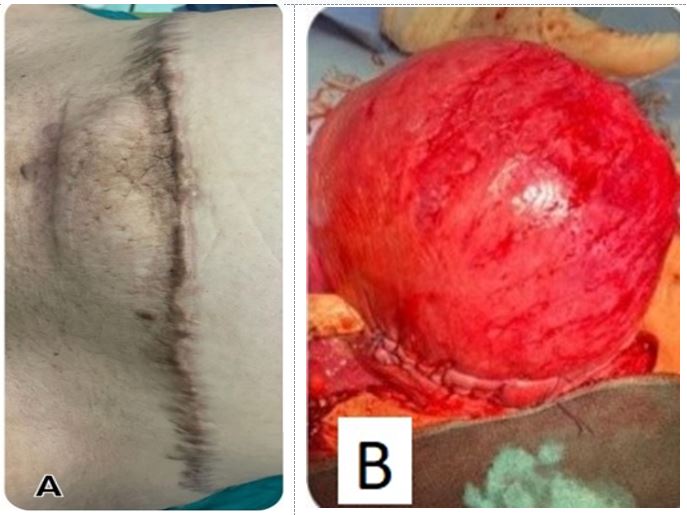
Figure 1. A) Abdominal condition on the day of cesarean section B) Uterus after cesarean incision repair
In this case report study, the patient referred to the physician because of heavy and prolonged menstrual bleeding caused by a large uterine myoma. β-hCG test and ultrasound of the patient were negative in terms of pregnancy, and she underwent myomectomy surgery while the patient was in the early stages of pregnancy (window period). Therefore, the patient was under close care during pregnancy and was visited every week. With continuous follow-up, the newborn was born without any problems at 37 weeks.
Based on the results of a study, laparoscopic myomectomy can be used to manage large and symptomatic myoma in normal women, which is a less invasive method (15), but there are many debates regarding myomectomy surgery during pregnancy. Based on the results of studies, the prevalence of complications and death in pregnant patients is higher than other patients (16), and there is a possibility of miscarriage between 18%-35% (17). However, the results of some studies show that surgical intervention along with drug treatments and continuous follow-ups can be useful and successful (18). According to the results of a systematic review study, when fibroids do not respond to conservative treatments during pregnancy, the use of myomectomy can be safe (19).
In another case report study (18), a nine-week pregnant patient with severe symptoms such as severe pain in the lower abdomen and acute urinary retention due to myoma undergoes myomectomy and progesterone therapy. Myomectomy was performed in this case to reduce the possibility of miscarriage. In the study of our case report, laparotomic myomectomy was performed in early pregnancy, with the difference that our patient's pregnancy was not known. In the report of Allameh and Allameh (20) and her colleagues, a pregnant woman is a candidate for myomectomy with subserosal leiomyoma. At first, physicians tried to improve the patient with conservative treatments, but due to the increase of symptoms such as leukocytosis, septic necrosis, pressure symptoms on the liver and rise of inflammatory markers, myomectomy was performed in the 20th week (20).
Despite the fact that some evidence shows that myomectomy should be performed after delivery, but when clinical findings show that myomectomy can have a beneficial result for the mother and the fetus, it seems necessary to perform it. However, there is conflicting literature in the field of performing myomectomy during pregnancy, which shows that conducting more studies in this field are necessary. Although in this report, the patient's pregnancy was not clear, and it was determined after myomectomy surgery, but with proper management during surgery, progesterone therapy and continuous and regular follow-ups, the newborn was born healthy.
None.
Ethical Statement
The protocol of this study approved by the Ethics committee of Farmanieh Hospital Medical Research Committee. All principles of Helsinki’s declaration were met throughout study processes.
vThe authors received no financial support for the research, authorship, and/or publication of this article.
The study data extracted for analyses in the current publication are available from the corresponding author upon reasonable request.
The authors certify that they have no affiliations with or involvement in any organization or entity with any financial or non-financial interest in the subject or materials discussed in the manuscript.

| Article View | 879 |
| PDF Download | 580 |
