
Iranian Society of Gynecology Oncology (IRSGO)
Document Type : Original Research Article
Authors
1 Department of Biology, College of Educations for Pure Science, University of Diyala, Diyala, Iraq
2 Department of Microbiology, Collage of Medicine, Diyala University, Diyala, Iraq
Highlights
✅ Viral coinfections identified through NGS underscore their potential impact on cervical health, emphasizing NGS's diagnostic sensitivity for viral infections not typically detected by standard gynecological methods.
Keywords
In the early 20th century, a new category of viruses called human papilloma viruses was discovered (1). It is a diverse group of viruses associated with important diseases affecting the skin and mucous membranes. Human papillomavirus is already one of the most common sexually transmitted viruses worldwide, affecting millions of people annually (2). The human papillomavirus (HPV) is responsible for a variety of diseases in humans, including cervical cancer, which is the second most common type of cancer among women (3). Most infections require an immune response within 8–12 weeks; the human papillomavirus may remain latent in the basal layers and become active later. Only a small percentage of those infected suffer from continuous tumors that develop into cervical intraepithelial neoplasia (CIN) type 1. This may be followed by CIN2, CIN3, and cervical cancer (4).
Several previous studies have shown an association between HPV and other viral infections of the cervix. The risk of developing cervical squamous cell carcinoma or adenocarcinoma is increased two-fold to ninefold among those infected with herpes simplex virus type 2 (HSV-2) (5). HR-HPV and HSV-2 coinfection occurred in approximately 27% of CIN patients (6). However, another study did not reveal a relationship between the herpes simplex virus and cervical cancer (7). Other studies have demonstrated the presence of HPV-Epstein-Barr virus (EBV) coinfection in cervical lesions (8). With the technological advances thus far, Next Generation Sequencing (NGS) has been used to explore the viral content in the cervix. NGS has been used in various studies to explore the viral content in the cervix. The presence of viruses from the Papillaviridae and Herpesviridae families in cervical swabs of HIV-infected patients in Brazil. Metagenomics is a field of study that focuses on examining the genetic material of microorganisms such as bacteria, fungi, and viruses directly from a particular sample (9). This method is used specifically when the types of objects are not known in advance (10). This study aimed to determine the viral coinfection in clinical cervical specimens by using next generation sequencing technology.
Eight cervical samples were collected from Iraqi women attending gynecology clinics in Baghdad hospitals. The viral content of the samples was determined using the Illumina DNA Prep tool (Illumina, USA) with the iSeq100 System device (Illumina, USA), according to the manufacturer's instructions.
DNA isolation
Virus genomic DNA was isolated from a swab sample according to the protocol of DNA-Sorb-A extraction from Sacace Biotechnologies (Italy).
Library preparation
The WGS libraries were prepared following the protocol for preparing Illumina DNA prep.
https://support.illumina.com/content/dam/illumina-support/documents/documentation/chemistry_documentation/illumina_prep/illumina-dna-prep-reference-guide-1000000025416-10.pdf.
Data Analysis
Sequencing results were analyzed using different bioinformatics tools.
Library Concentration (ng/µl)
| Sample | Concentration ng/µl |
| 1 | 6.9 |
| 2 | 9.8 |
| 3 | 4.71 |
| 4 | 9.1 |
| 5 | 8.3 |
| 6 | 9.3 |
| 7 | 3.85 |
| 8 | 8.9 |
The eight samples have been assembled using MetaviralSPAdes. The assembled contigs for each sample have been used as the input for blasting against the viruses in the NT database in NCBI to annotate contigs.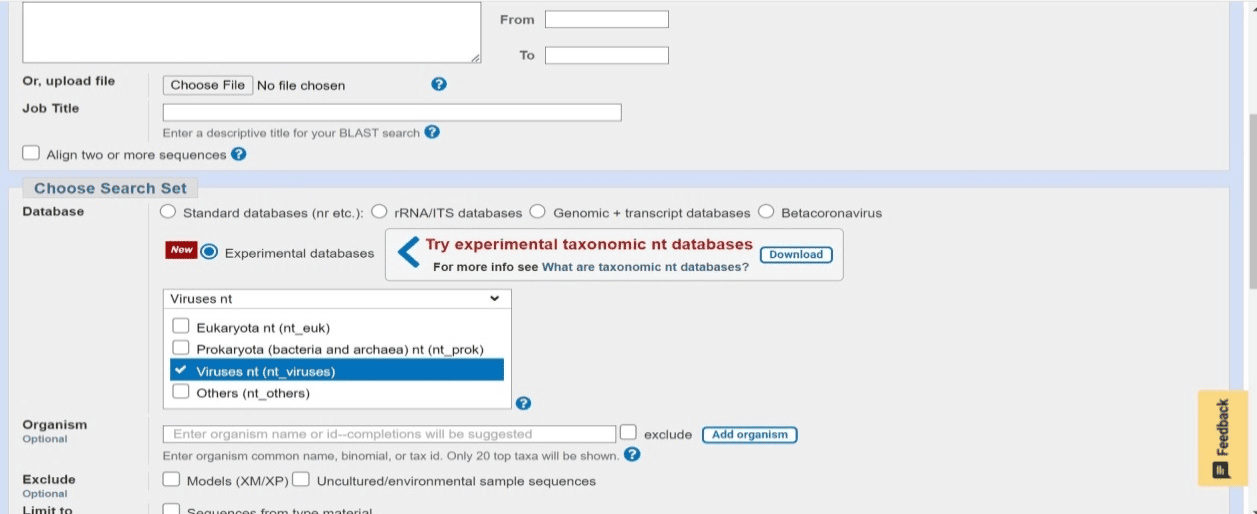
There are three virus-related contigs assembled by MetaviralSPAdes in sample one; all contigs were then blasted against the viruses in the NT database, and the viruses were HPV16, HHV4, and HIV. In sample two, we found five virus-related contigs. These contigs then blast against the viruses in the NT database, and the viruses were HPV16, HHV4, and HIV. Sample three had four viruses related to contigs, and the viruses were HPV16, HHV4, and HIV. There are two viruses related to sample four, and the viruses were HPV16, HHV4, and bovine alphaherpesvirus 5. In sample five, we found six viruses related to contigs, and the viruses were HPV16, HHV4, and HIV. Sample six had six viruses related, and the viruses were HPV16, HHV4, HIV, and Human Endogenous Retrovirus K. There are four virus-related contigs in sample seven, and the viruses were HPV16 and HHV4. There are five virus-related contigs assembled by MetaviralSPAdes in sample eight. All contigs then blast against the viruses in the NT database, and the viruses were HPV16, HHV4, and HIV.
Overall, we can notice that there are many identical contigs (based on the contig size and blast hit) present in more than one sample. In total, there are a total of 18 contigs identified among the eight samples, and the table below summarizes the blast hit related to each contig has been summarized as well.
| Contig | Size | Type of viruses |
| 1 | 1491 | Human gammaherpesvirus 4 alpha satellite DNA Human papillomavirus type 16 |
| 2 | 1486 | Human papillomavirus type 16 |
| 3 | 1149 | HIV-1 Human papillomavirus type 16 |
| 4 | 2330 | Human gammaherpesvirus 4 |
| 5 | 1916 (No hits) |
No viruses related |
| 6 | 3018 | HIV-1 Human papillomavirus type 16 |
| 7 | 2846 | Human gammaherpesvirus 4 alpha satellite DNA Human papillomavirus type 16 |
| 8 | 2842 | Human gammaherpesvirus 4 |
| 9 | 1527 (unique) |
Bovine alphaherpesvirus 5 Jingmen tick virus |
| 10 | 1936 (No hits) |
No viruses related |
| 11 | 1482 | Human gammaherpesvirus 4 Human papillomavirus type 16 integration site Human endogenous retrovirus K |
| 12 | 1435 (No hits) |
No viruses related |
| 13 | 1317 | Human gammaherpesvirus 4 alpha satellite DNA |
| 14 | 1826 | HIV-1 |
| 15 | 3184 | Human gammaherpesvirus 4 alpha satellite DNA Human papillomavirus type 16 |
| 16 | 1911 (No hits) |
No viruses related |
| 17 | 1484 | HIV-1 Human papillomavirus type 16 |
| 18 | 1999 | Human gamma herpesvirus 4 |
The study highlights a diverse viral community in HPV-infected cervical samples, including HPV16 and HHV-4 as dominant types. The presence of EBV in all samples suggests its potential role in cervical cancer development alongside HPV. The study underscores the impact of HPV on other viral infections in the cervical environment.
In this study, the nucleic acids of the main viruses present in the cervical region of women infected with human papillomavirus were analyzed through next-generation sequencing technology, and the metagenomic technique was chosen to study the virome content of eight samples diagnosed with human papillomavirus. The human internal biological environment is complex, and its role in maintaining health and disease susceptibility is still an area of research. While many recent studies have been conducted to understand the interaction of human-specific viruses with the body, the interaction between these two biological components is dealt with only limitedly (11, 12).
The results of the samples from women with human papillomavirus were studied and showed that there was a diverse viral community, in addition to human papilloma viruses and other human viruses, such as HHV-4 and HIV virus, which revealed that with the increase in human papilloma virus infections, the probability of finding other viruses was low, and these results were partially consistent with the results of a study (13). HPV 16 and HPV 4 were the dominant types in all samples. While this study did not refer to HIV detection in any of the samples used to detect the viral diversity of cervical samples, another study in Brazil (9) found HIV, HPV, and HHV (100%, 86%, 0.06%), respectively. During viral infections, viruses capture several cellular mechanisms, such as molecular mass, nucleotides and amino acids, chemical power sources, and cell protein creation mechanisms, to support their cycle of replication and expression of specific proteins. When a particular virus infects a cell, an intersecting phenomenon may occur, which means that the next virus may not be able to infect the cells, or it may infect them without multiplying (14). In addition, immunity for viruses plays a crucial role in preventing other viruses, where INF 1 produces an enzyme that impedes the doubling of viruses, leading to the initiation of an antiviral case in non-infected cells (13). As a result, the higher the proportion of HPV, the more activated the antiviral situation, leading to a lesser variety of other virus infections (15). This could be due to the nature of the long-term HPV infection. In general, these findings may indicate the potential impact of the widespread HPV infection on other viruses in the same environment, such as the cervical area, in addition to the human papillomavirus. The presence of the HHV-4 or EBV virus was also detected. This virus typically affects surface cells and B cells, causing a lifelong infection. The latency stage of this virus occurs in B cells. However, the possibility of EBV infecting epithelial cells in the cervix has been detected. Interestingly, this study found that EBV was present in all samples studied for virome, indicating a potential role of EBV in cervical cancer development. A recent study revealed the presence of the virus in endocervical tissues infected with human papillomavirus, with the risk of cervical cancer quadrupling in women positive for human papillomavirus and EBV (13). Upon the arrival of the EBV virus to the cervix, this virus may expedite the integration of the human papillomavirus genome into the host cell, leading to genomic instability in the HPV-infected cervical cells (16). Coinfection with EBV and HPV may impact their replication cycles (17, 18). One of the limitations facing our study is the small sample size, which has led to the use of a small number of samples to study viral diversity. Therefore, it is necessary to expand the study sample size to achieve more precise estimates.
Viral coinfection, as the current study showed, has an impact on the development of cervical cancer. Next grneration sequencing (NGS) has high diagnostic sensitivity for detecting infections, especially viral infections that are not diagnosed by gynecologists.
The authors would like to express their appreciation to all the individuals who participated in this study.
Each author participated in data analysis, drafting, and revising of the manuscript, and consented to assume responsibility for all aspects of this project.
The authors declared no conflicts of interest.
The research was not specifically funded by any public, commercial, or not-for-profit agencies.
Prior approval was obtained from the Scientific Research Ethics Committee of the Scientific Department at the University (ref. No CEPEC/008-1/1/2023).

| Article View | 1,602 |
| PDF Download | 739 |
